A hand on a production dashboard showing order volume and margin figures
Starter guide · 3 of 4

Is print on demand profitable?

Print on demand is profitable when the retail price you can defend for your design exceeds the landed cost per piece — production, print, branding and shipping — by enough to cover your marketing and returns; because there is no stock, a shop cannot lose money on unsold inventory, only on pieces it sells too cheaply.

That sentence contains the honest answer: the model removes the biggest risk of a textile brand — stock — and leaves the question that decides every brand, whether your design commands a price. What follows is a worked example with live numbers, one piece and fifty side by side, and the four levers that move it.

Worked example

One T-shirt, from retail price to margin: one piece, and fifty.

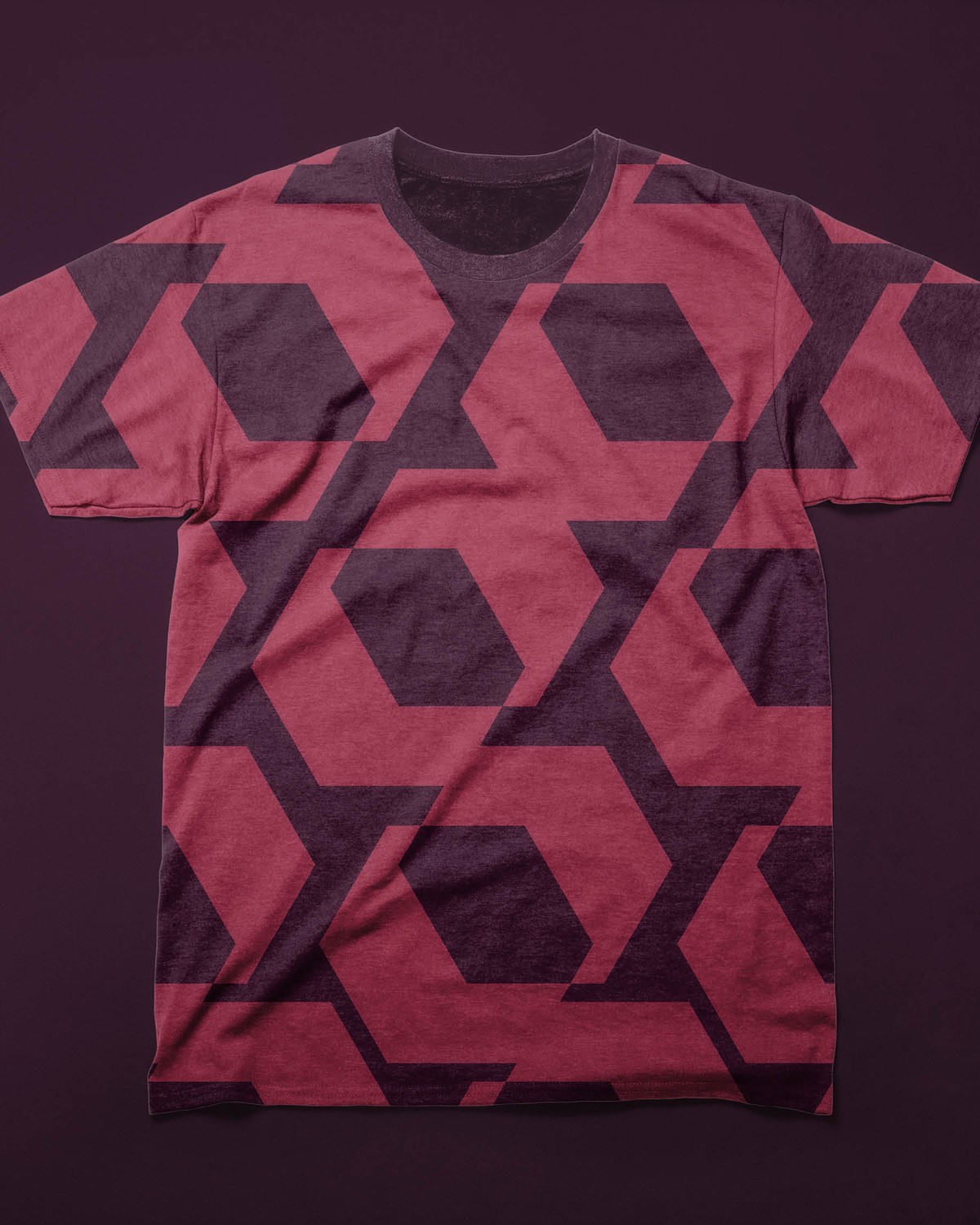
Assumptions, stated so you can replace them with your own: a unisex organic cotton T-shirt with an all-over print, shipped from Portugal to Germany and sold at €49.90 including 19 % German VAT. The left column is one piece to one customer; the right column is fifty pieces in one order to one address. The production price is the live Sample tier figure from the catalog in both columns, the shipping rates come from the shipping calculator, and the retail price is the one number you choose.

Line 1 piece 50 pieces, one address
Retail price including VAT€49.90€49.90
VAT at 19 %− €7.97− €7.97
Net revenue€41.93€41.93
Production and print, Sample tier price (live)− €24.95− €24.95
Shipping per piece, Portugal to Germany− €6.95− €0.24
Gross margin per piece€10.03 (24 %)€16.74 (40 %)

LIVE FIGURES REFRESH WITH THE CATALOG AND THE SHIPPING TABLE · VAT RATE AND RETAIL PRICE ARE ASSUMPTIONS · MARKETING, PAYMENT FEES AND RETURNS COME OUT OF THE GROSS MARGIN.

What the second column shows

Fifty pieces in one order to one address — a stockist, a team, an event, a pre-sold drop — travel as one parcel of 9.3 kg: €12.05 in the shipping calculator, €0.24 per piece instead of a full parcel each. The production price is the same live Sample tier figure in both columns, and fifty pieces in a month already put you in the Small run tier, whose per-unit price is lower — so the right column is conservative rather than optimistic. The tier finder shows your exact figure.

Fifty single-piece orders to fifty customers sit in between: each pays its own parcel, but all fifty pieces count towards your monthly tier. And the same shirt sold ten euros higher changes the picture more than any discount does — which is the point of the next section.

A unisex T-shirt with an all-over reactive print, the product in the worked example
The four levers

What moves the margin, in order of size.

01 · Retail price

The largest lever by far

Print on demand sells design, not fabric. A print-on-demand brand that competes on price with mass-produced blanks loses; a brand whose design commands a premium keeps most of it, because the cost side is the same per piece whether you charge little or a lot.

02 · Volume tier

Production price steps down

The production price per unit steps down from 10 units a month (Small run), again from 100 (Production) and from 1,000 (Scale). The tier follows your monthly volume across all orders, not the size of one order.

03 · Order size

Several pieces per parcel

Shipping is per parcel, so two pieces to one customer divide the shipping cost. Bundles, sets and multi-piece offers are worth designing for; a single T-shirt is the most expensive way to ship a T-shirt.

04 · Returns

Size guides are margin

Returns are billed at outbound shipping cost, so a clear size guide and good product photos are margin, not decoration. The returns policy sets out when a piece is remade at no cost, for example after a production fault.

Two honest notes

Where the money is not lost, and where the fit is weaker.

Not lost

No stock, no batch, no write-off

There is no unsold stock to write off, no minimum batch to pre-finance, no warehouse, no setup fee. A design that does not sell has cost you the time to make it and nothing else. That is why print on demand suits testing: put ten designs live, learn which three sell, and put the effort there.

Where the fit is weaker

When the blank sets the price

Print on demand earns its margin on design. The fit is weaker when the retail price is anchored to the cheapest blank on the market, or when the product only needs a placed one-colour logo at the lowest possible unit cost — the print-method comparison is honest about where screen print serves that better. Volume is not the limit: the tiers run from one piece to 10,000 units a month and beyond, and a thousand pieces of one design still ship white-label from Portugal, Spain or the Netherlands with nothing pre-financed.

Compare print methods

FAQ

Print on demand margins, answered

What margin can I expect per piece with print on demand?

It depends on your retail price, your volume tier and how many pieces travel in one parcel. The worked example on this page runs the arithmetic for one all-over-print T-shirt at the Sample tier with live production and shipping figures; the margin grows with volume and with multi-piece orders, and shrinks fastest when the retail price is set by the cheapest blank on the market.

Do I pay anything if a design does not sell?

No. Nothing is produced or charged until a customer orders, so a design that does not sell has cost you the time to make it and nothing else. That is why print on demand suits testing a range before committing to a stocked run.

How does volume change the production price?

The production price per unit steps down at 10, 100 and 1,000 units per month, following your total monthly volume rather than the size of one order. The tier finder on the pricing page shows your tier and its price instantly.

Who pays for returns in print on demand?

Returns are billed at outbound shipping cost, so a clear size guide and good product photos protect the margin directly. The returns policy sets out when a piece is remade at no cost, for example after a production fault.

Can I run print on demand alongside my own stock?

Yes. Many brands test designs on demand and move the proven sellers to a bulk run, or keep the long tail of designs on demand while the core range is stocked. The platform does not require exclusivity or a minimum share of your range.

Test the arithmetic

Price one real product with your own numbers.

Register, add the product you have in mind and put your retail price next to the live production price and the shipping calculator. Ten minutes, no commitment, no stock.