












What is reactive printing?
The full technical detail — dye chemistry, fixation steps, water and energy footprint. Reads like a textile-engineering reference rather than a designer guide.
Read more →

A practical guide to reactive print on cotton — what it is, how it actually works, why it feels different from the alternatives, and how to design artwork that takes advantage of the chemistry. Written for designers, brand teams and procurement people who want enough depth to make confident decisions without becoming a textile chemist.
Most people who’ve worked with printed apparel have a mental model that goes roughly like this: artwork is digitally rendered, the printer applies pigment to the fabric, the pigment dries, the print is done. That’s essentially correct for pigment print, sublimation and DTF transfer.
Reactive print works on a fundamentally different principle. The reactive dye molecule contains a chemical group (vinyl sulfone, monochlorotriazine, or related variants) that forms a covalent bond with the hydroxyl groups present in cellulose — the long molecular chains that make up cotton fibre. Under heat and steam, that bond fixes permanently. The dye doesn’t sit on the cotton; it’s chemically attached to it.
This is why a reactive-printed garment feels like the unprinted cotton blank. There’s no surface layer to detect, no slight stiffness where the print sits, no plastic-feel boundary. The cotton goes in, comes out the other end as cotton with colour bonded into the fibre. That’s the whole story in one sentence.
Everything else is implementation detail.
There are three ways one molecule can stick to another. Mechanical attachment (Velcro is mechanical). Ionic attraction (salt dissolved in water). Covalent bonding (the hydrogen and oxygen in a water molecule are covalently bonded). Covalent is the strongest of the three; chemists treat covalently-bonded compounds as a single molecule rather than two molecules holding hands.
Pigment print uses mechanical attachment via a binder — pigment particles glued to the fabric surface. The bond is mechanical and the bond is the binder, not the fabric. When the binder degrades over wash cycles, the pigment lifts. That’s why pigment-printed cotton eventually cracks at flex points.
Reactive print uses covalent bonding directly between the dye and the cellulose molecule. There’s no binder, no surface layer, no third-party glue. The dye is chemically part of the fibre. Wash cycles don’t degrade the bond — the bond is as stable as the fibre itself. The colour stays in place until the cotton itself starts to break down (typically after 600+ wash cycles).
That stability is the entire commercial premise. A T-shirt with reactive AOP is a T-shirt that still looks new after twenty washes — whereas the equivalent pigment or DTF garment shows visible fading on the same timeline.
Most digital print on textiles operates on a defined area — a rectangle on the front of a tee, an oval on the back of a hoodie. The artwork has to live inside that area. Step outside and the print stops.
All-over print means the entire fabric panel is printed before it’s cut into garment shape. Industrial reactive AOP works on rolls of fabric, sometimes 150–200 cm wide, running through the print head as a continuous web. The dye lands across the full surface. After fixation and cut-and-sew, every panel of the finished garment carries the artwork — front, back, sleeves, hood, kangaroo pocket, hem, neckband. Edge to edge.
For designers, this changes what’s possible. Repeat patterns work continuously across panels. Photographic imagery can wrap around the body. A logo can appear on six different panels of a hoodie if you want it to. The artwork file is sized to the roll, not to a print zone.
For the customer, this means a finished product with no visible print boundary and no “blank panel” where the print stopped. The whole garment looks deliberately designed because it was deliberately designed.
Submit artwork sized for the cut panels of the finished product. Most designers new to AOP send a square logo and ask “where will this go on the tee?” The answer is: everywhere it’s tiled. If you wanted it once, you wanted to submit a panel-sized canvas with the logo positioned where it should land on the finished garment.
Cut-and-sew assembly joins printed panels at seams. Repeat patterns flow continuously across panels; photographic imagery breaks at the seam unless you’ve specifically positioned the focal point to land on a single panel. For statement-piece imagery, ask the production team for a panel-layout overlay of the chosen product before you finalise the artwork.
Reactive print resolves at roughly 200–300 DPI on the finished garment. Submit artwork at that density across the full panel size. A T-shirt panel at 50×70 cm needs roughly 4000×5500 pixels at 200 DPI. If you submit a 1500×2000 file scaled up, you’ll see the upscaling.
Designers coming from screen-print or DTF often expect the print to add weight or stiffness to the artwork area. With reactive AOP it doesn’t — the whole panel feels like cotton, regardless of how dense the artwork is. Take advantage. Solid-saturation backgrounds and full-bleed edge-to-edge designs work without comfort cost.
Reactive print on cotton looks different in the hand than on screen. Pantone references give you a directional indication; the finished garment gives you the actual colour. Always order a sample at the actual SKU and fabric base before committing to a production run. The Sample Pack is the formal entry to this workflow — the cost is credited against your first metre order if you proceed.
Cut-and-sew offsets the visible position of the artwork from the file position. A logo placed on the centre of a tee artwork file might end up an inch off-centre on the finished garment if the cut layout shifts. Build cut allowance into your panel design, especially for tightly-positioned focal elements.
Sublimation works on polyester and synthetics; reactive works on cotton and cellulose. They’re different chemistries with different substrates and different aesthetics. If your spec sheet says “digital print” without specifying which, the supplier is being unhelpful — ask explicitly.
Brand-side designers often build artwork files on the assumption that production will handle the technical conversion. Reactive print on cotton needs files prepped at full panel resolution, in the right colour profile, with print-safe-zone awareness. Spend the design hours on the artwork; production will print whatever you submit.
The number-one source of post-production disappointment is brands committing bulk production budget without a hand-and-eye check on a real finished garment first. Always sample. Always.
Per-unit pricing on reactive AOP at production-tier volumes typically lands close to or under per-unit DTF / screen-print — especially when you account for the 3–5× longer wear life. Brands that priced it as a “premium-only” option in their head are surprised by how the maths works out at scale.
Reactive print resolves slightly differently on different cotton bases. The same file produces matte clarity on Percale, slightly more saturated colour on Sateen, a textured weave-through-print effect on Half Panama, and full-bleed soft-hand on cotton jersey. Pick the base that supports the design, not just the lowest-cost cotton. The Sample Pack covers all seven bases for exactly this reason.
The full technical detail — dye chemistry, fixation steps, water and energy footprint. Reads like a textile-engineering reference rather than a designer guide.
Read more →Honest side-by-side technical comparison: substrate, bond type, wash durability, hand-feel impact, and when each is the right choice.
Read more →Comparison against the dominant POD print technology — volume economics, wash durability, premium positioning, and where each fits.
Read more →Why organic cotton is the Fabrixa default base for reactive AOP, with the comparative trade-offs across cotton, linen and recycled blends.
Read more →The formal entry point to evaluation: physical swatches of all seven bases, so you can judge hand, weight and colour before you commit.
Read more →Production-volume conversation, pricing-tier review, MSA terms and the sample programme — the right channel for commercial questions.
Read more →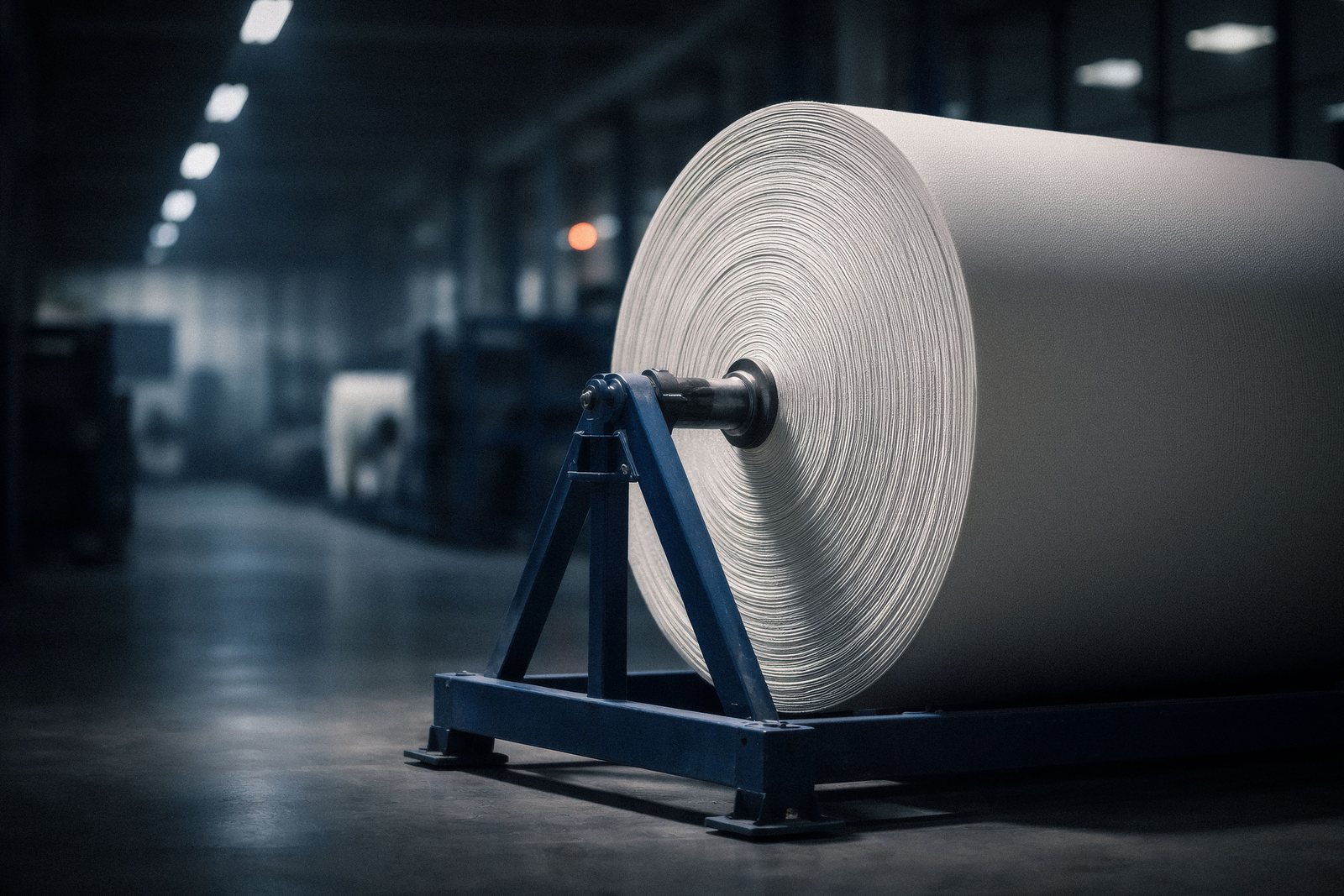
Order a Sample Pack to feel the cottons in the hand, see the print quality across every base, and build the right mental model before committing artwork hours. The pack cost is credited against your first production run.
Every screen of the platform explained — from signup to dispatch. Setup, designs, channels, orders, billing — in plain English.