








You launch a fashion drop with zero inventory risk by producing on demand instead of buying stock upfront. With on-demand fashion drops, you open the collection, take real orders, and only then have each piece printed and cut. Because the minimum order is one, nothing is made until someone has paid for it — so a slow drop costs you nothing in dead stock, and a fast one scales without a warehouse.
That inverts the old model. Traditionally a label commits cash to a production run, hopes the sizing curve is right, and eats whatever doesn’t sell. On-demand flips the order of operations: demand first, production second. Below is a practical playbook for running a limited drop or capsule this way, plus the trade-offs to plan around.
Why on-demand removes the inventory gamble
A conventional drop carries three linked risks: you might over-produce and mark down the surplus, under-produce and disappoint buyers, or misjudge the size split and end up long on XS and short on L. On-demand collapses all three. Each order triggers its own production, so the size curve is whatever your customers actually bought, and there is no surplus to discount.
It also frees up the cash a run would have tied up. Instead of paying for hundreds of units before launch, you pay per unit as orders come in — the revenue and the cost land in the same window. For a small label or a side-project capsule, that difference is often what makes the drop possible at all.
The zero-inventory drop playbook
Here is the sequence we see work for labels running on-demand fashion drops on the platform.
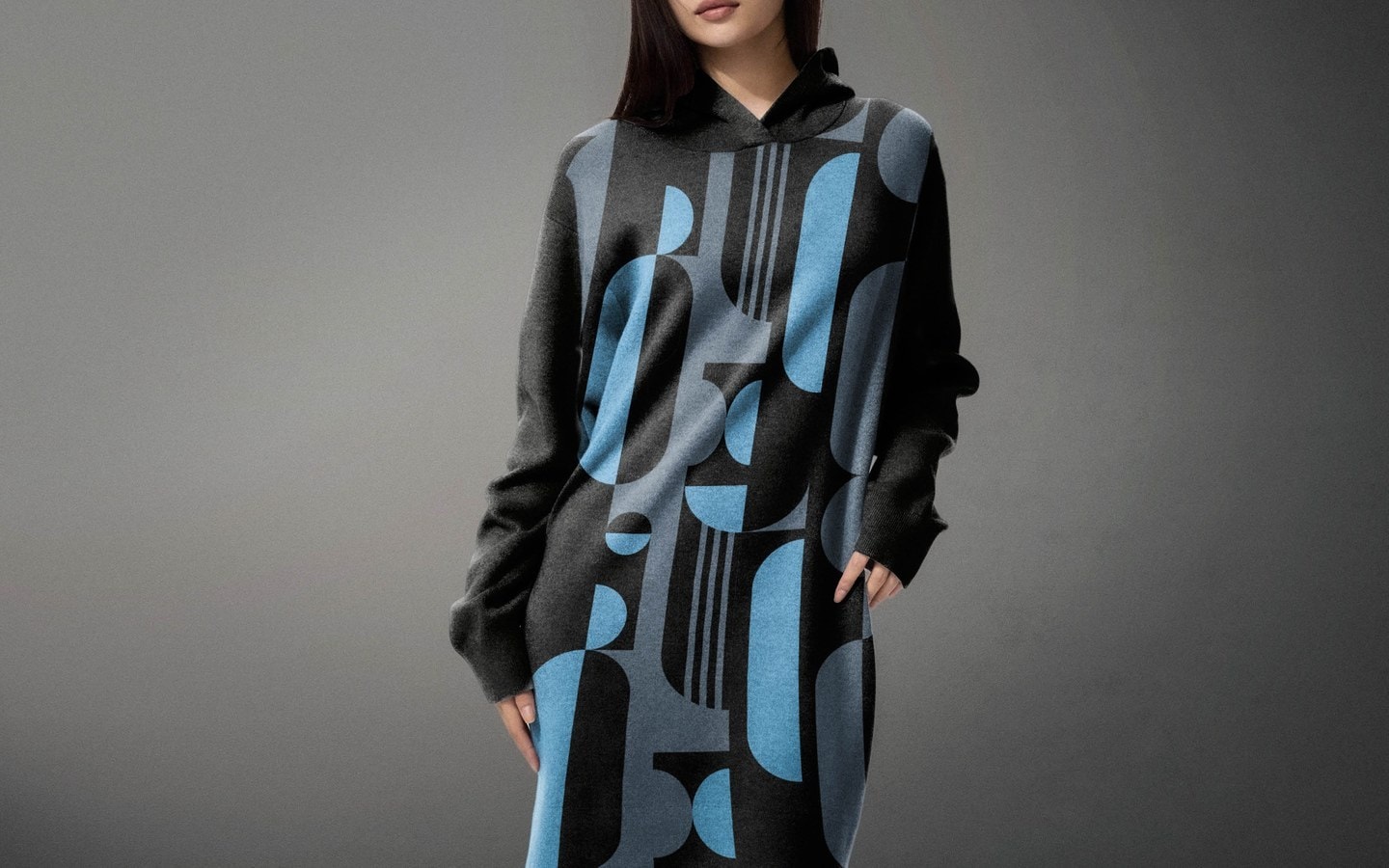
- Design at panel level. If you want all-over print, design the full garment panel — edge to edge, across front, back, sleeves and hood — before cut-and-sew. Supply artwork at roughly 200–300 DPI on the finished garment. For placed prints, a print-ready PDF is enough.
- Order a Sample Pack first. Reactive dye resolves differently on different cotton bases — matte clarity on percale, more saturated on sateen, textured on half panama. A Sample Pack lets you see your colours on the real fabric before you commit, and its cost is credited against your first order.
- Validate demand before you scale. Open pre-orders, run a waitlist, or launch a tight first release. Because there is no minimum and no setup fee, you can put every colourway and size live and let the orders tell you what’s real — no need to guess a buy quantity.
- Connect your storefront or the API. Link Shopify or WooCommerce, or push orders through the custom API, so each sale flows straight into production. You can also embed Fabrixa Studio in your store as a customiser, letting buyers personalise a piece; you attach the saved design to the order automatically.
- Print to order at MOQ 1. Every paid order is produced individually — one piece or ten thousand, same process. Apparel is made in Portugal in roughly 6–9 business days, so buyers get a realistic window and you never hold stock.
- Ship white-label as standard. Parcels go out under your brand, with your return address and no Fabrixa branding. To the customer it’s your fulfilment, not a third party’s.
- Reorder only the winners. After the drop, look at what actually sold. There’s no leftover inventory to clear, so a second release — or a permanent line — is a clean decision based on real demand, not a bet you’re trying to recover.
What “made to order” is made from
Drops on the platform run on natural-fibre and polyester bases, printed with the method that suits each fabric:
| Element | How it works for a drop |
|---|---|
| Minimum order | 1 piece — no minimum, no setup fee, no contract |
| Print method (cotton/linen) | Reactive: the dye forms a covalent bond with the fibre, so colour holds typically 600+ wash cycles and the fabric feels unprinted |
| Print method (polyester) | Sublimation, produced in the Netherlands |
| All-over print | Whole panel printed before cut-and-sew — no blank zones |
| Dispatch | White-label under your brand and return address |
| Made in | Portugal, Spain and the Netherlands |
Reactive print matters for a drop because the colour becomes part of the cotton rather than a layer on top — it won’t crack or fade at the flex points the way a surface print can over repeated washes. If your capsule is meant to be worn hard and kept, that durability is part of the product.
Keeping a made-to-order drop sustainable and honest
Printing to order is inherently leaner than a speculative run: nothing is produced that nobody bought, which removes the overproduction that drives most textile waste. Organic cotton is the default base, and the fabric carries GOTS, OEKO-TEX Standard 100 and Made in Green certification. Production sits inside a short EU supply chain rather than long-haul freight.
We’d rather be precise than boastful about this: on-demand production and an EU supply chain are measured reductions, not a “zero-impact” or “carbon-neutral” claim. It’s a lower-waste way to make a drop, with honest limits.
FAQ
Can I really launch a drop with no upfront stock?
Yes. The minimum order is one and there are no setup fees or contracts, so you open the collection, take orders, and each piece is produced only after it’s paid for. You hold no inventory before, during or after the drop.
How long does production take?
Apparel made in Portugal takes roughly 6–9 business days. Building that window into your drop’s dispatch messaging keeps buyer expectations realistic without holding stock.
Will my customers know it’s made on demand elsewhere?
No. Dispatch is white-label as standard — parcels ship under your brand, with your return address and no Fabrixa branding. The whole experience reads as your own fulfilment.
How do I know the print will look right before I launch?
Order a Sample Pack first. It covers the main cotton bases so you can check how your colours resolve on real fabric, and its cost is credited against your first order.
Ready to run your first zero-risk drop?
Start by ordering a Sample Pack to see your colours on the real bases, then connect a storefront and open pre-orders. If you’d like a walk-through of how a capsule flows from artwork to white-label dispatch, see our approach for brand owners and the wider platform, or talk to our team about your drop.
