









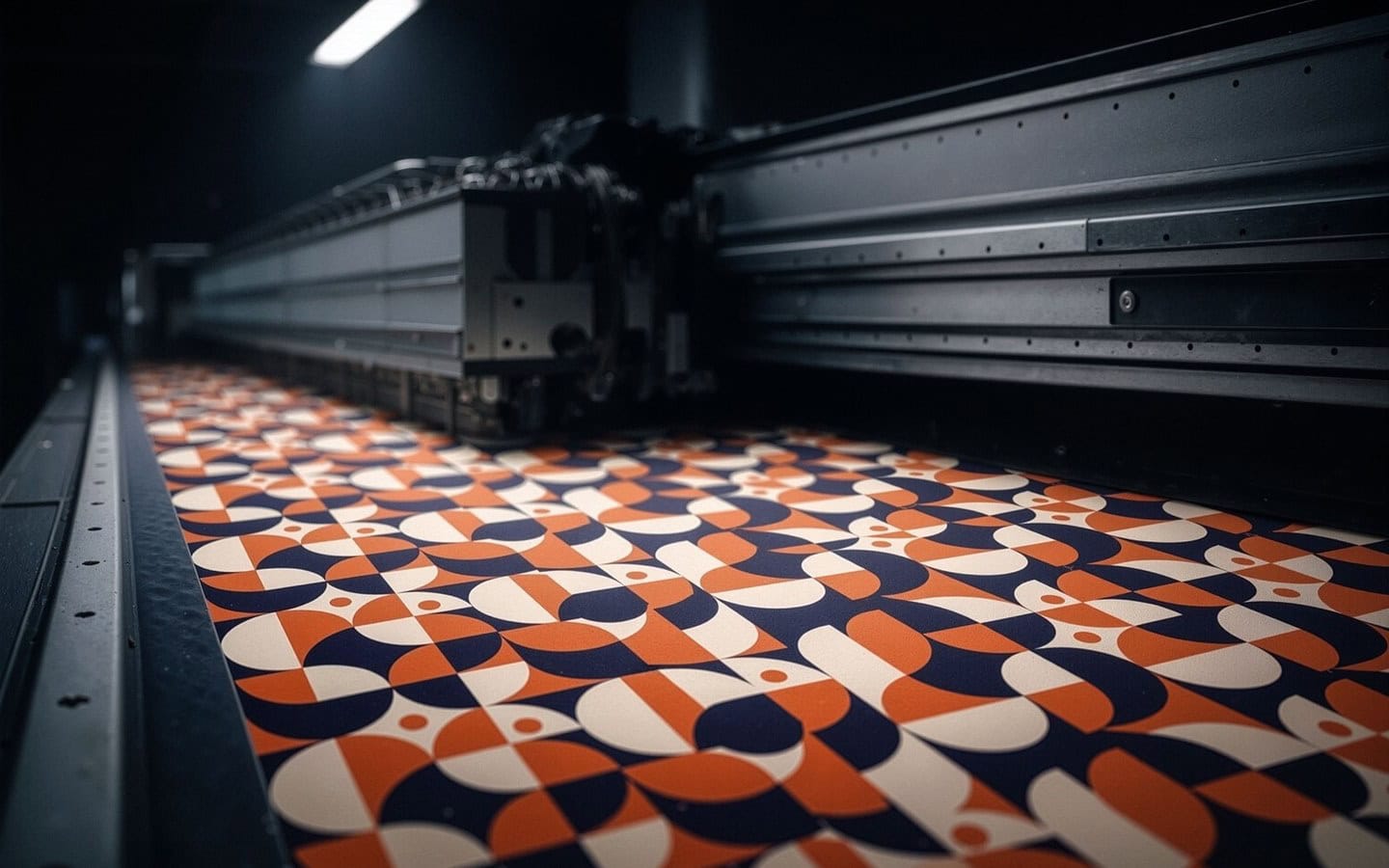
Which print method should you use for T-shirts and other textiles? It depends on three things: the fabric, the artwork and how the piece will be worn and washed. On cotton, the answer for durability is reactive printing. The reactive dye forms a covalent bond with the cellulose in the fibre and is fixed permanently under heat and steam, so the colour becomes part of the fabric rather than a layer on top — it typically holds 600+ wash cycles, effectively until the cotton itself wears out.
This guide compares the six methods you will meet in textile printing — DTG, DTF, screen print, sublimation, pigment and reactive — on where the colour sits, what it survives, how it feels and which run sizes it suits. Fabrixa runs reactive print on cotton and linen and sublimation on polyester; we do not offer DTG or screen print, and the table says so plainly where another method is the better tool.
How each method actually bonds to the fabric
Durability comes down to where the colour lives — inside the fibre or on top of it.
- Reactive printing — the dye chemically reacts with cellulose (cotton, linen and other natural fibres), forming a covalent bond fixed under heat and steam. There is no surface layer, so the printed fabric feels exactly like unprinted cotton and the colour can’t crack or peel.
- DTF (direct-to-film) — the design is printed onto a film, then heat-bonded on top of the fabric. It works on a wide range of substrates, which is its strength, but it is a surface layer sitting on the garment rather than part of it.
- DTG (direct-to-garment) — water-based pigment inks are jetted straight onto the finished garment over a pretreatment layer and cured with heat. Fine detail and no setup per design, but the ink sits on the surface: expect visible fading after a few dozen washes, and a slightly stiffer hand on dark garments, where a white underbase is needed.
- Screen print — ink (plastisol or water-based) is pushed through a stencilled mesh screen, one screen per colour, then cured. Very durable and cost-efficient at volume, with a thick, opaque layer that sits on top of the fabric. Each new colour or design needs its own screen, so it suits larger runs of simple artwork rather than one-offs or photographic designs.
- Sublimation — dye is converted to gas and bonds into polyester and other synthetics. Durable and soft on the right substrate, but it does not work on cotton — different chemistry, different fabric.
- Pigment — coloured pigment is held to the surface by a binder. Simple and broadly compatible, but the binder sits on top and tends to crack and fade at flex points over repeated washes.
Comparison table: DTG, DTF, screen print, sublimation, pigment and reactive
| Method | Best substrate | How it bonds | Wash durability | Hand-feel |
|---|---|---|---|---|
| Reactive | Cotton, linen, natural fibres | Covalent bond, dye in the fibre | Highest — typically 600+ washes | Like unprinted cotton, no added stiffness |
| DTF | Many fabrics, incl. blends | Film transfer bonded on top | Good, but a surface layer | Noticeable film / patch feel |
| DTG | Cotton and cotton-rich blends | Pigment ink jetted onto the garment over a pretreatment, heat-cured | Moderate — fades over a few dozen washes | Slight surface hand; stiffer where a white underbase is used |
| Screen print | Cotton, blends, most fabrics | Ink layer pushed through a mesh screen, one screen per colour, cured | High for a surface layer — plastisol outlasts water-based inks | Thick, opaque layer you can feel |
| Sublimation | Polyester / synthetics only | Dye gas bonds into polyester | Good on polyester; N/A on cotton | Soft on polyester |
| Pigment | Cotton and blends | Pigment held by a surface binder | Lower — cracks / fades at flex points | Slight surface hand, softens with wear |
When to use each method
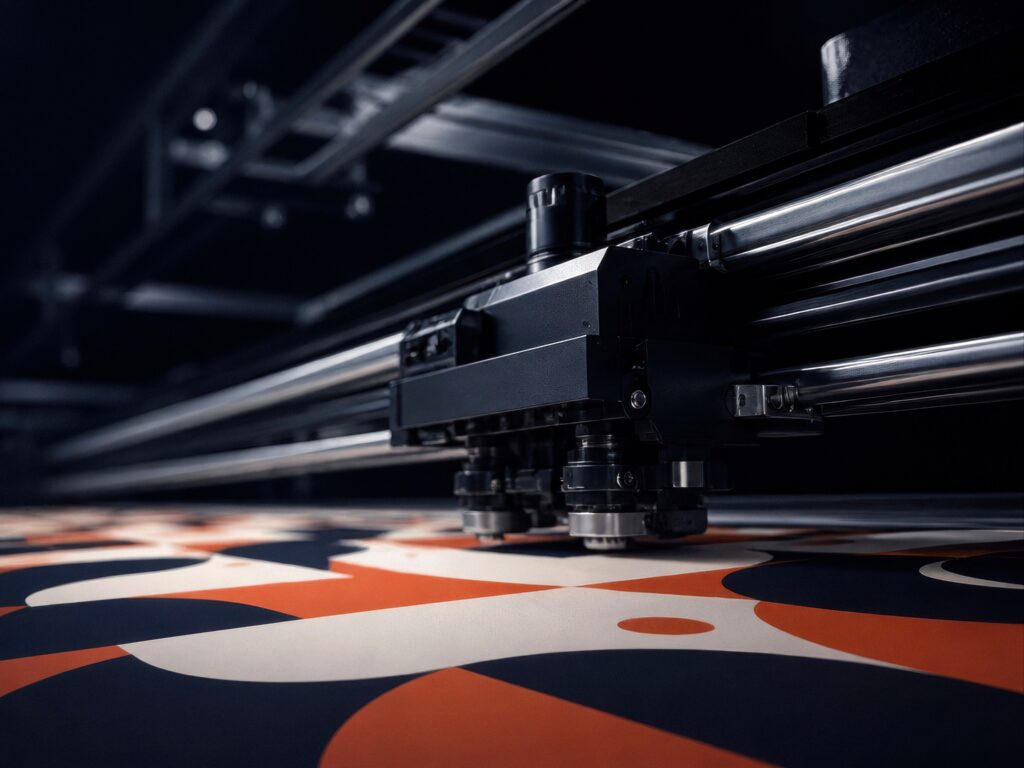
Choose reactive when your product is cotton or linen and you want the print to outlast the seasons — everyday tees, hoodies, kidswear, home textiles like duvet covers and cushions, and fabric by the metre. It’s the method behind Fabrixa’s apparel range, and it’s especially strong for all-over print, where the whole fabric panel is printed edge to edge before cut-and-sew.
Choose DTF when you need a single method that runs across many different fabric types, or for one-off placements on blends where an in-fibre reactive process isn’t an option. You accept a surface layer in exchange for that flexibility. We compare the two in detail in our reactive vs DTF guide.
Choose DTG when you need detailed, multi-colour artwork on single finished garments with no setup per design — samples, small personalised runs, photographic prints on light cotton. Accept that the ink sits on the surface and that the print will soften and fade sooner than an in-fibre method.
Choose screen print when you are producing a larger run of the same simple design — a logo tee in one to three colours, workwear, merchandise — and want a bold, opaque layer at a low cost per piece. The setup per colour makes it a poor fit for one-offs, and it cannot do edge-to-edge or photographic work the way reactive all-over print can.
Choose sublimation when your substrate is polyester or a synthetic — sportswear, technical fabrics, some accessories. It’s the right tool for those materials, which is why Fabrixa runs sublimation on polyester in the Netherlands while reactive print on cotton and linen is made in Portugal and Spain.
Choose pigment when broad compatibility and a soft, worn-in look matter more than maximum wash life, and you’re comfortable with fading at flex points over time. For a like-for-like on cotton, see reactive vs pigment.
Why “which lasts longest on cotton” has a clear answer
The reason reactive wins specifically on cotton isn’t marketing — it’s chemistry. Because the dye bonds covalently with the cellulose and there’s no film or binder on the surface, there’s nothing to crack, peel or wash off. The colour degrades only as the cotton fibre itself degrades. DTG, DTF, screen print and pigment all keep their colour in a layer above the fabric, so they’re limited by how well that layer survives flexing and laundering. Sublimation isn’t in the running here at all, because it can’t bond to cotton in the first place.
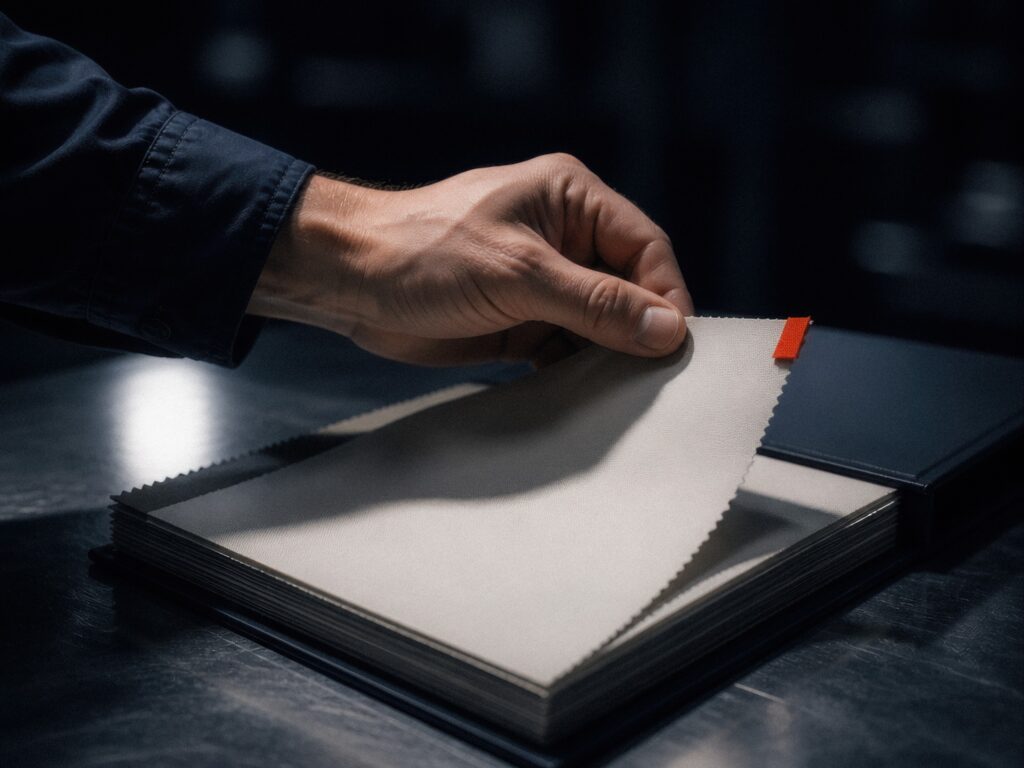
One practical note: reactive resolves differently on different cotton bases. A percale gives matte clarity, a sateen reads more saturated (that’s the “silk-touch” finish some brands ask for), and a textured half panama softens fine detail. If exact colour and clarity matter for your range, print a sample on the actual base before you scale.
FAQ
Does reactive printing on cotton feel different from an unprinted shirt?
No. Because the colour is bonded inside the fibre rather than layered on top, reactive-printed cotton feels the same as unprinted cotton — no coating, no stiffness, no patch.
Can I use sublimation on a cotton T-shirt?
No. Sublimation bonds only to polyester and other synthetics. For cotton you need reactive (best durability) or, for surface prints, DTG, DTF, screen print or pigment.
Is DTF ever a better choice than reactive?
Yes, when you need one method across many different fabric types, or a specific placement on a blend where reactive isn’t available. On pure cotton where durability and hand-feel are the priority, reactive is the stronger choice.
Is DTG the same as reactive printing?
No. DTG jets pigment ink onto the surface of a finished garment; reactive dyes the fibre itself before the garment is cut and sewn. DTG wins on per-piece flexibility for placed designs; reactive wins on wash durability, hand feel and edge-to-edge coverage on cotton.
When does screen print beat the other methods?
For larger runs of a simple design in a few colours on cotton or blends, screen print gives an opaque, durable layer at a low cost per piece. For one-offs, photographic artwork or all-over prints it is impractical, because every colour needs its own screen.
How long does reactive print actually last?
Colour typically holds through 600+ wash cycles — in practice, until the cotton garment itself wears out, because the dye is part of the fibre rather than a coating that can wash away.
See it on your own fabric
The fair answer to “which lasts longest on cotton” is reactive, but the right way to choose is to feel it. Order a Sample Pack to see how reactive print resolves across different cotton bases — the cost is credited against your first order — or read our full reactive print guide for the technical detail. If you’d rather talk it through for your specific range, talk to our team and we’ll help you match the method to the fabric.