Pigment-printed cotton can pass the eye-test in a photo and fail in the hand. Always sample on the actual substrate before you commit to bulk — the difference shows up immediately on physical fabric.
The print chemistry decides how the cotton feels.
Reactive and pigment are the two dominant digital print chemistries on cotton. They look alike in a render; they feel completely different in the hand. Reactive bonds dye into the fibre, so the colour becomes part of the fabric. Pigment glues colour onto the surface, so it sits on top. Both have legitimate uses — here’s how to choose.
If it’s cotton and you want it to feel like cotton, use reactive.
Reactive chemistry forms covalent bonds with the cellulose fibres in cotton — the colour becomes part of the cloth at a molecular level, so nothing sits on the surface, nothing changes the hand-feel, nothing cracks or peels. Pigment bonds colour to the fabric surface with a binder: the right call on synthetics (where reactive doesn’t work) and heavy outdoor textiles (where UV stability matters more than hand-feel), the wrong call on cotton apparel and bedding.
One bonds into the fibre. One sits on top.
Covalent bond — the colour is the cotton.
Reactive dyes carry reactive groups (typically vinyl sulfone or monochlorotriazine) that form a stable covalent bond with the hydroxyl groups on cellulose fibres. After fixation under heat and steam, the dye is chemically part of the fibre — no surface layer, the cotton hand-feel preserved, and colour that can’t crack, peel or wash out short of fading the fibre itself.
- Substrate: cotton and linen (cellulose fibres)
- Bond type: covalent (chemical)
- Wash durability: typically 600+ cycles
- Hand-feel: identical to unprinted cotton
Mechanical bond — the colour sits on top.
Pigment print uses insoluble pigment particles suspended in a binder. Cured under heat, the binder cross-links and glues the particles to the fabric surface — the pigment never enters the fibre. On heavy fabrics the surface layer is invisible; on light cotton it adds detectable stiffness, and the print can crack with extreme flex over thousands of washes.
- Substrate: anything — cotton, polyester, blends, canvas
- Bond type: mechanical (binder + pigment)
- Wash durability: 100–300 cycles typical
- Hand-feel: slight surface layer on light fabrics
The full comparison.
Where reactive and pigment differ on the metrics that matter for a textile-production decision.
| Reactive print | Pigment print | |
|---|---|---|
| Substrate | Cotton and linen | Any — cotton, polyester, canvas, blends |
| Bond mechanism | Covalent bond into the fibre | Pigment + binder glued to the surface |
| Hand-feel impact | None — identical to unprinted cotton | Detectable on light fabrics |
| Colour saturation | Deep, full-bleed, breathes through the fibre | Strong on heavy fabrics; flatter on light cotton |
| Wash durability | 600+ cycles before measurable fade | 100–300 cycles; eventual cracking on flex points |
| UV stability | Good, but not built for direct sun | Excellent — engineered for outdoor use |
| Water use | Higher — wash-off removes excess dye | Lower — no post-print wash |
| Energy use | Higher — steam-fixation step | Lower — heat-cure only |
| Best for | Apparel, bedding, premium cotton home textiles | Outdoor / synthetic textiles, low-volume merch |
| Worst for | Polyester, performance synthetics, direct sun | Premium cotton where hand-feel is the brief |
The substrate decides the chemistry.
The right method isn’t a brand preference — it’s a material-science decision driven by the fabric you’re printing and how the finished product gets used.
Use reactive when…
- T-shirts, hoodies and dresses on organic cotton
- Duvet covers, pillowcases and premium bedding
- Indoor cushions, table linens and runners on cotton
- Anything where hand-feel and wash durability are buying criteria
Use pigment when…
- Outdoor textiles in poly-acrylic with UV exposure
- Heavy decor canvas where a surface layer is invisible
- Synthetic or blended substrates reactive can’t bond to
- Anything where the substrate isn’t cellulose
What this means in practice.
A “digital print” line tells you nothing about the chemistry. Ask the supplier explicitly: reactive, pigment, sublimation or DTF — each has different wash-and-wear implications.
Wash a sample at the upper care-label temperature 10–20 times. Reactive survives without measurable change; pigment may start to fade at flex points — collar, cuff, pocket.
Industrial reactive on every cotton SKU.
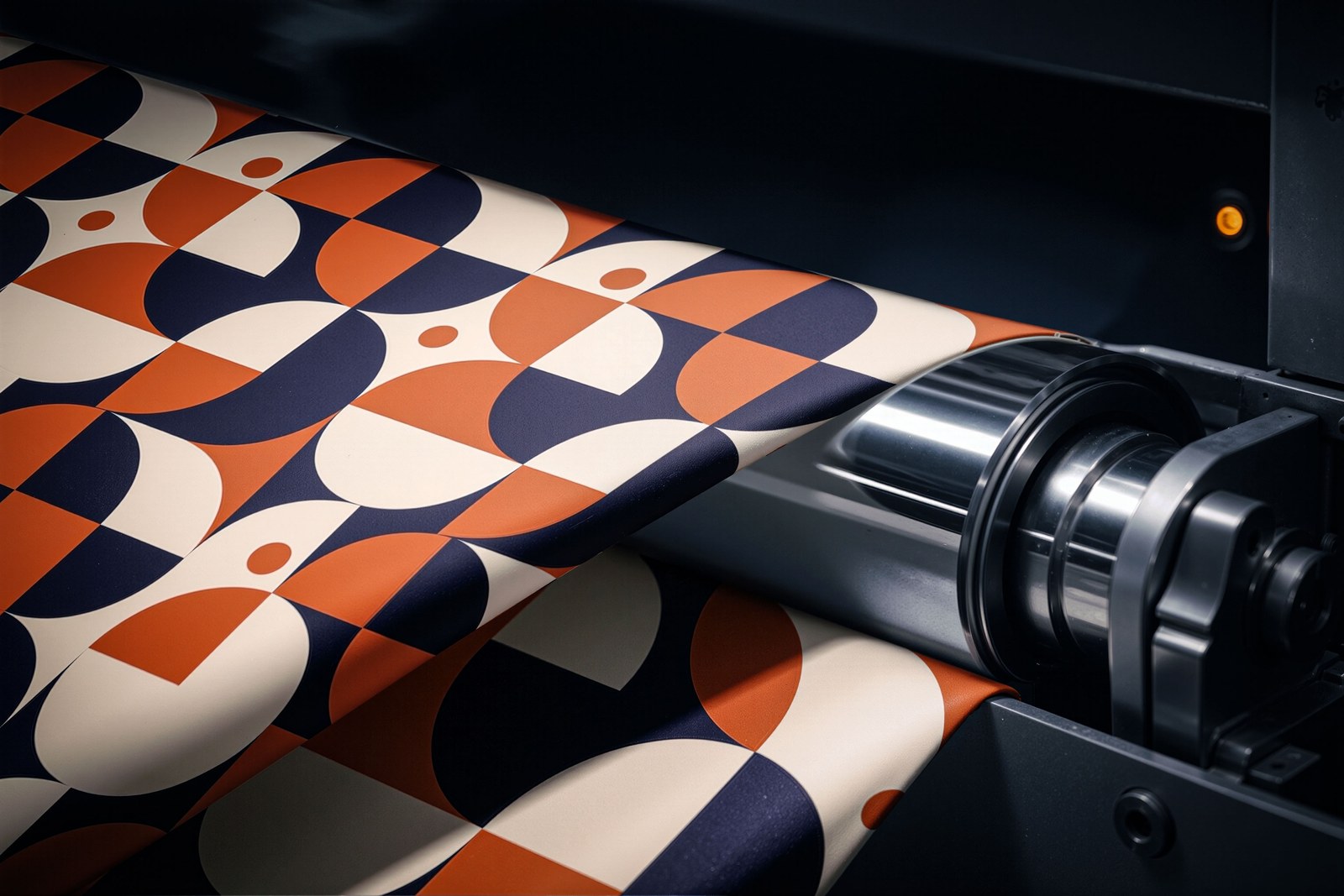
Our default on cotton is industrial reactive AOP — full coverage across the panel, no surface layer, the same European print process premium fashion houses rely on. The chemistry follows the substrate: reactive on cellulose, sublimation on the synthetic home-textile lines (towels, mats, napkins), and pigment only where a substrate genuinely needs it, such as UV-exposed outdoor poly-acrylic.
- Reactive on cotton — apparel, bedding and indoor home textiles, made across Portugal and Spain.
- Sublimation on synthetics — the Netherlands lines where polyester needs it.
- Method on every product page — the print chemistry is listed in the quick-specs strip. No “digital print” catch-all.
Check the chemistry with your own hands.
The most reliable way to judge reactive against pigment is to handle them. Our sample pack ships physical swatches of every Fabrixa cotton base — reactive-printed test panels included — for hand-and-eye comparison against whatever else is on your shortlist.