








01
Fabric prepared
Cotton is washed and pre-treated with a solution that primes the fibres to absorb dye. Skip this stage and the dye bonds unevenly.

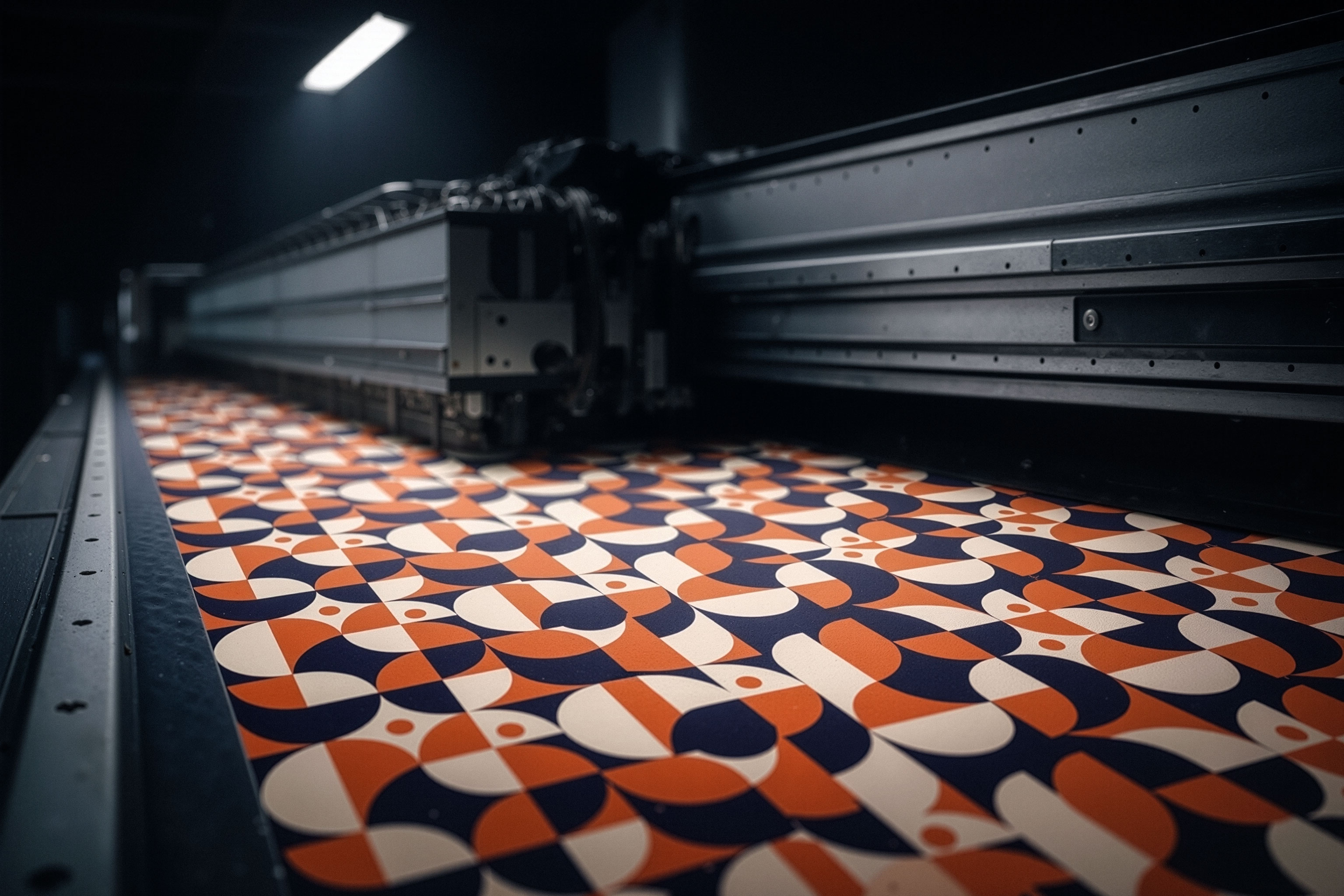
Reactive printing is a textile dyeing process where specialised dyes chemically bond with the cotton fibre itself. Instead of sitting on top of the fabric as a layer, the colour becomes part of the material — for the deep, soft, wash-fast result a surface print can’t match.
Reactive dyes contain chemical groups (called “reactive groups”) that form covalent bonds with cellulose fibres — the molecular structure of cotton. Under controlled heat and humidity, these bonds become permanent.
The result is fabric where the colour is chemically integrated with the fibre. There’s no plastic film, no surface coating, no risk of cracking — the textile keeps its softness, breathability and natural drape.
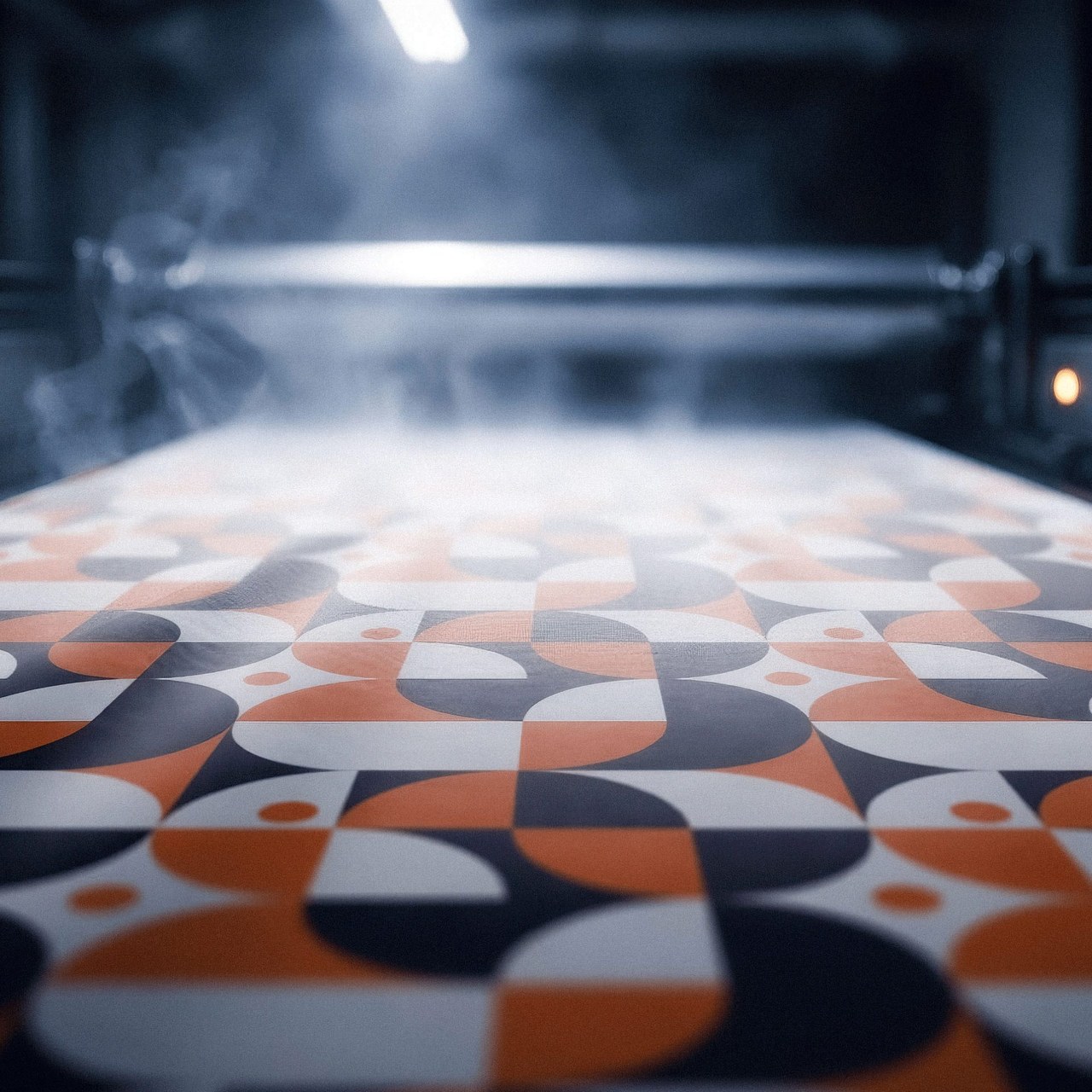
Reactive printing needs industrial equipment and precise chemistry. Each stage is calibrated so the dye-fibre bond forms correctly and consistently, every run.
Cotton is washed and pre-treated with a solution that primes the fibres to absorb dye. Skip this stage and the dye bonds unevenly.
An industrial inkjet applies reactive dye to the fabric in a controlled environment — each colour formulated for the specific base.
The printed fabric passes through a drying chamber that removes water and solvents while holding the dye in position before fixation.
Steam under controlled heat and humidity triggers the reactive groups to bond with the cotton cellulose. The bond is now permanent.
Wash cycles remove all unbonded dye and chemistry. What stays is fabric where every visible colour molecule is part of the fibre.
A final dry and stabilise, and the fabric is ready for cut-and-sew — or rolling for fabric-by-the-metre orders.
Most print-on-demand runs on DTG, DTF or sublimation — cheaper to operate and easier to scale at small volumes. We run reactive because the result on cotton justifies the investment.
| Reactive | DTG | Sublimation | DTF | |
|---|---|---|---|---|
| How colour sits | Bonded into the fibre | Pigment ink + binder on top | Gas-fused into polyester | Film + adhesive on top |
| Hand-feel | Soft, no surface layer | Surface layer, can feel stiff | Soft on polyester only | Plastic feel, visible film edge |
| Wash life | 600+ cycles | 20–40 cycles before fade | 100+ cycles on polyester | 20–30 cycles before peel |
| Best fabric | Cotton and linen | Cotton, but limited | Polyester / synthetic | Most fabrics |
Reactive isn’t free — the equipment is costly, the chemistry is complex and batches take time. The trade-off pays back in how the finished textile feels and how long it lasts.
Customers feel the difference: soft hand, breathability, drape. Reactive print keeps what makes natural cotton premium — a surface print can’t.
Reactive bonds survive 600+ wash cycles before any measurable fade — several times longer than DTG or DTF. Fewer “the print cracked” complaints, fewer returns.
If your brand promises premium, reactive is the method that delivers it on cotton. Use it for the pieces that carry your positioning.

Reactive printing uses real water and energy, and we don’t pretend otherwise. We’ve built around the systems that make it responsible at scale: certified organic cotton, water treatment, controlled chemistry and prints durable enough that they don’t need replacing.
Order a single piece, feel the quality in hand, then scale — or talk to us about volume for a capsule launch or platform integration. Real humans, 24h response.