Certifications

TECHNOLOGY — CERTIFICATIONS

What the labels mean. What we hold. What it should cost to lie.

Textile certifications carry different weight. OEKO-TEX and GOTS are the two that EU procurement teams routinely require — both are independently audited and expensive to fake. Below: what each certification actually verifies, the tier hierarchy that buyers ask about, the cycle on which they get re-audited, and what Fabrixa carries today.

OEKO-TEX STANDARD 100 · GOTS · EU AUDIT-READY

WHAT FABRIXA HOLDS

The certifications applied across the range.

Different products in the catalogue carry different cert combinations — apparel and bedding hold the strictest tier; outdoor synthetics carry product-appropriate certifications. Each product page lists what applies to that SKU. Here’s the summary.

OEKO-TEX STANDARD 100

Class I — the strictest tier

Applied to apparel cotton, kidswear cotton, and bedding cotton bases. Class I is the strictest tier in the certification — the same one applied to babywear sold under three years old. Limits over 300 individual chemical residues to levels far below regulatory thresholds.

GOTS

Global Organic Textile Standard

Applied to organic cotton bases used across apparel and home textiles. GOTS verifies the chain of custody from organic farming through to finished textile, including labour and chemistry standards at every processing stage.

OEKO-TEX STANDARD 100

Product-appropriate tier on synthetics

Outdoor poly-acrylic cushions, microfiber shower curtains, and other synthetic-substrate items hold OEKO-TEX Standard 100 at the product-appropriate tier — verified against the chemical limits for the use case.

OEKO-TEX STANDARD 100

A chemical-residual safety certification, by tier.

OEKO-TEX Standard 100 verifies that a textile contains residual chemicals only below specified limits across hundreds of substances — pesticides, heavy metals, formaldehyde, allergenic dyes, carcinogenic compounds, phthalates. The limit thresholds depend on the product class, which depends on how the textile contacts the human body.

Re-audit cycle is annual. The certificate references on Fabrixa shipments resolve to the live registry where you can verify they’re currently active.

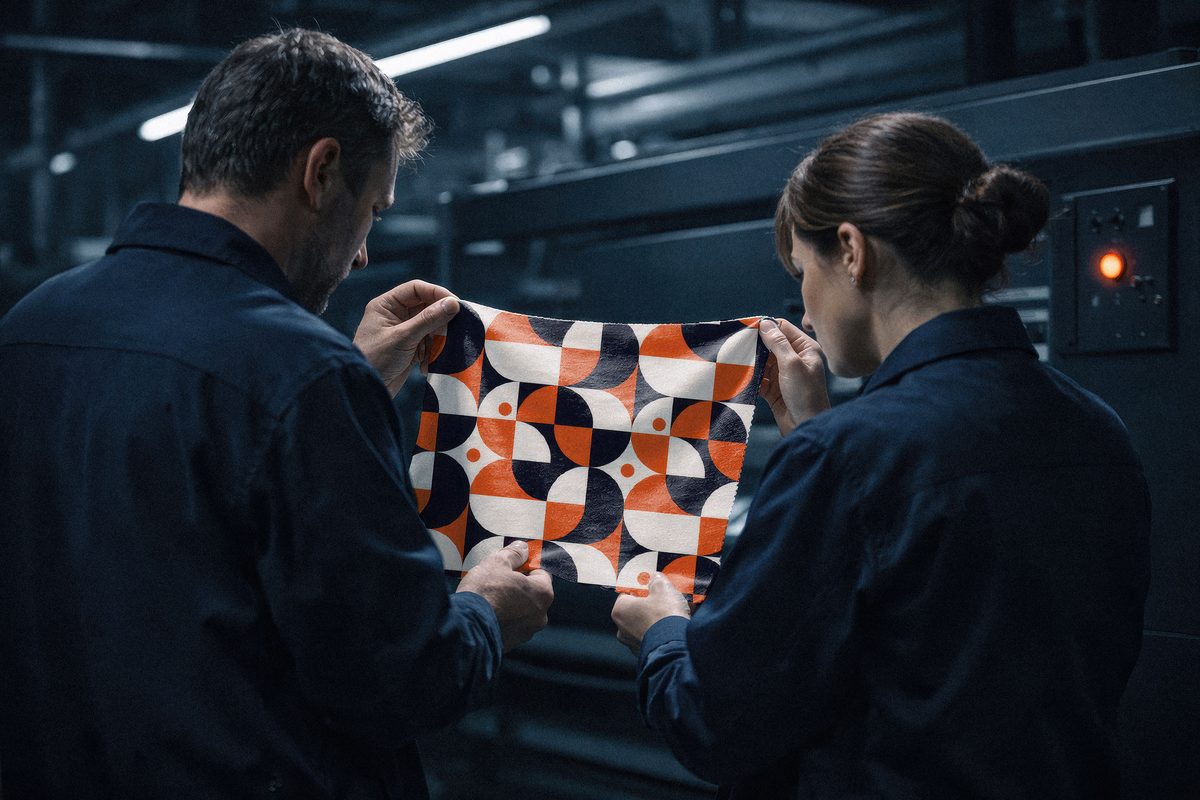
Quality control inspection of reactive-printed fabric — OEKO-TEX & GOTS audit standard
Tier Use case Restriction level Where Fabrixa applies it
Class IBabywear, articles for under-3 wearStrictest — lowest residual limitsKidswear (mandatory by use case); apparel and bedding cotton bases (we apply Class I as our default)
Class IIArticles in skin contact (apparel, bedding)StrictUsed by other producers as the apparel default; we deliberately apply Class I instead
Class IIIArticles without skin contact (curtains, decor)ModerateCurtains, decorative cushions on synthetic bases — product-appropriate tier
Class IVDecorative material (upholstery, wall coverings)LowerNot used on Fabrixa products — everything skin-adjacent or higher
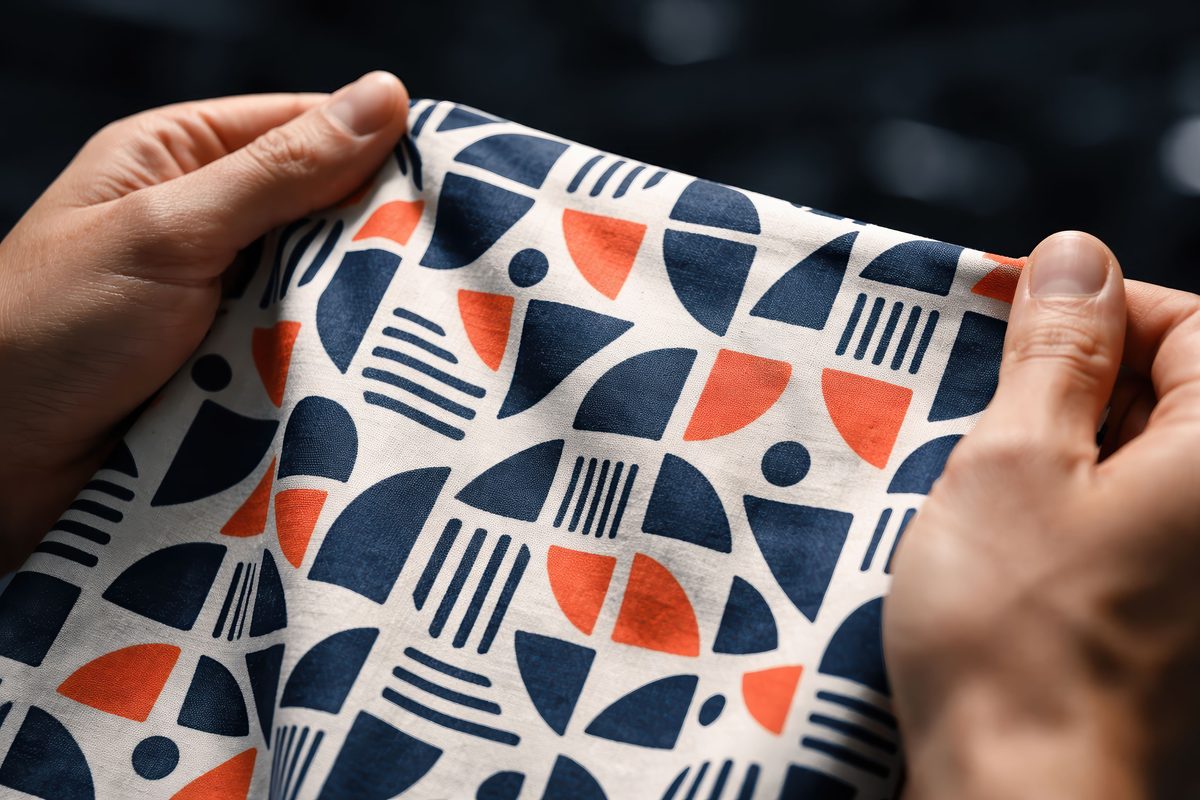
Meters-level quality control — Fabrixa certified production audit trail
GOTS — GLOBAL ORGANIC TEXTILE STANDARD

Chain-of-custody for organic textiles, end to end.

GOTS is the world’s most widely-recognised organic-textile certification. It verifies that the textile contains a minimum proportion of certified-organic fibre (95% for “organic” label, 70% for “made with organic”) AND that every processing stage in between — spinning, weaving, dyeing, printing, finishing, cut-and-sew — meets defined environmental and social criteria.

Re-audit cycle is annual. Every facility in the supply chain holds its own GOTS certificate; the chain of custody documentation on every shipment resolves to those individual facility certificates.

  • Organic farming verified at the cotton level
  • Restricted-substance list for dyes, auxiliaries, and finishes
  • Wastewater treatment requirements at every processing stage
  • Social criteria covering working conditions, hours, child labour, freedom of association
  • Mandatory traceability documentation through the entire chain
ADJACENT CERTIFICATIONS

Other labels you’ll see — what they mean.

Procurement teams often see a forest of certification logos with overlapping claims. Quick orientation on the most common ones — what each one actually verifies, where it overlaps with OEKO-TEX or GOTS, and where it adds something distinct.

Certification What it verifies Audit cycle Used by Fabrixa
OEKO-TEX Standard 100Chemical residual limits in finished textilesAnnualYes — default across the range, Class I on apparel and bedding
OEKO-TEX Made in GreenCombines Standard 100 + Sustainable Production auditAnnualAvailable on request for specific SKU lines
OEKO-TEX STePSustainable Textile Production at facility levelThree yearsAt our Portuguese print partner’s facility
GOTSOrganic content + social and environmental processing standardsAnnualYes — on organic cotton apparel and bedding bases
GRS (Global Recycled Standard)Recycled content with chain of custodyAnnualNot currently — recycled-content lines on roadmap
BCI (Better Cotton Initiative)Improved farming practices on conventional cottonVariousNot used — we go to GOTS on the cotton we use
BLUESIGNChemical management at production-facility levelAnnualNot directly — OEKO-TEX + STeP cover the same ground
EU EcolabelEU-administered environmental performance labelThree–four yearsAvailable on specific SKU programs — talk to sales
HOW TO READ A CERTIFICATE

Three checks before you trust a certification claim.

Plenty of textile producers cite certifications they don’t actually hold — or hold one tier and claim a higher one. These three checks take ten minutes and tell you whether a certificate claim is real.

01
CHECK THE CERTIFICATE NUMBER

OEKO-TEX and GOTS both have public registries. Every active certificate has a unique number that resolves to the live entry — product, facility, expiry date, restriction level. If the supplier can’t produce a number that resolves, the claim isn’t real.

02
CHECK THE EXPIRY DATE

Certificates expire annually (most common). A 2022 certificate cited in 2026 doesn’t cover today’s production. Always check the certificate is currently valid for the production batch you’re receiving.

03
CHECK WHAT’S CERTIFIED

A facility-level STeP certificate doesn’t mean every product the facility ships meets Standard 100. A Class III certificate doesn’t cover skin-contact apparel. Read the certificate scope, not just the brand of the certificate.

Fabrixa shipments include the certificate references resolved against the live registries — not just logo claims. ESG and procurement teams can verify against the public entries directly.

DOCUMENTATION

Per-order paper trail.

SHIPS WITH EVERY ORDER

Default certification documentation pack:

  • OEKO-TEX certificate reference (resolves to public registry)
  • GOTS chain-of-custody reference for organic cotton SKUs
  • Country-of-origin and EU labour-standards declaration
  • Per-batch production reference (batch resolves to workshop)
  • Care-label translation per destination market
UNLOCKS ON REQUEST

For procurement / ESG review:

  • Full PDF certificates from each certification body
  • Annual audit summary across the supply chain
  • Restriction-list compliance per SKU
  • EU Ecolabel certification on specific SKU programs
  • Per-SKU sustainability data for ESG / customer disclosure
FOR PROCUREMENT & ESG

Get the certification pack.

Procurement teams evaluating Fabrixa as a supplier can request the full certification documentation — OEKO-TEX certificates, GOTS chain-of-custody refs, supplier audit trail — before placing the first order. We send the pack within 48h.

Cart (0 items)

Create your account