











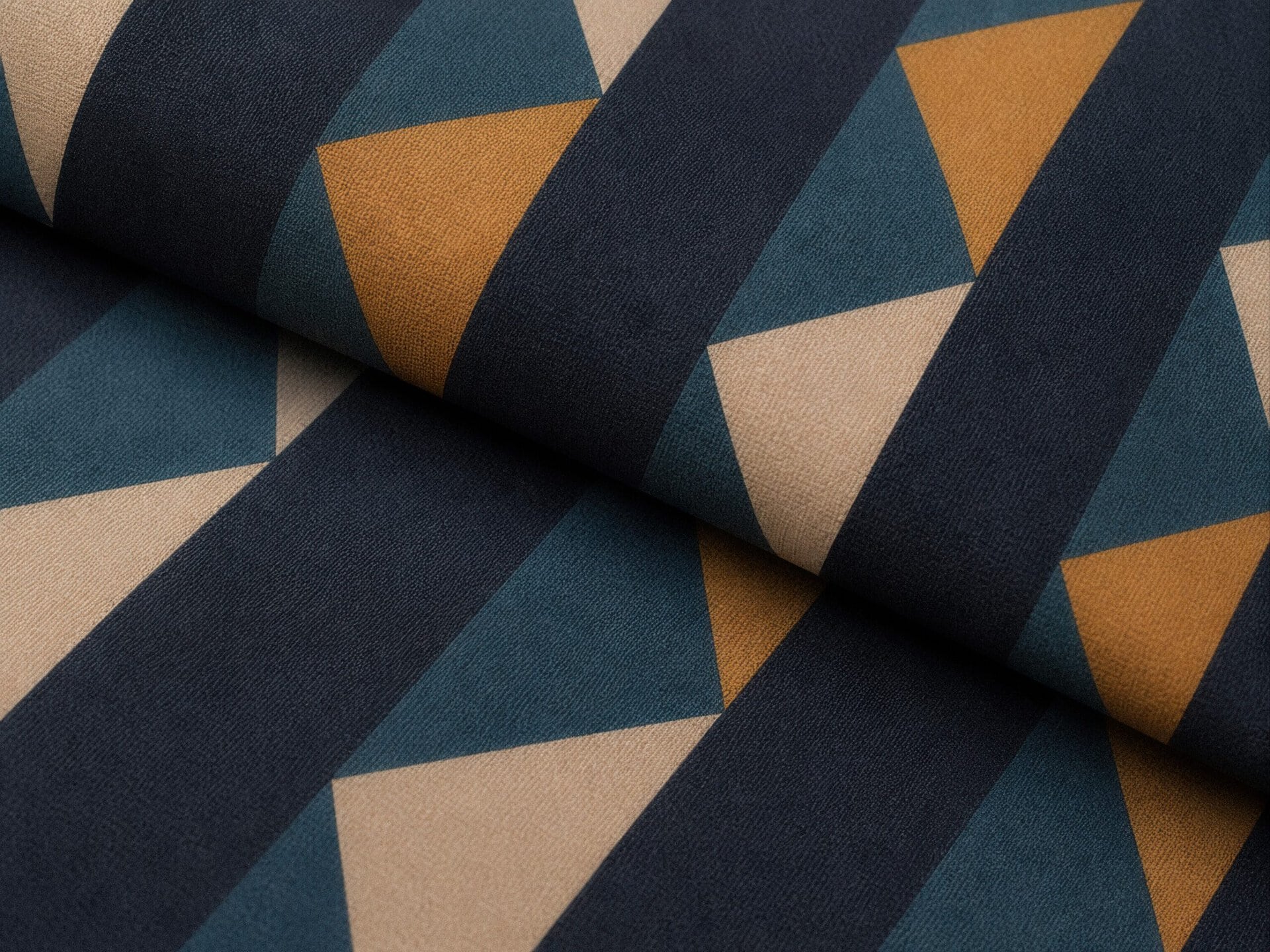
Reactive prints don’t crack or fade because there is nothing on the surface to crack or fade. The reactive dye forms a covalent bond with the cellulose in cotton fibre and is fixed permanently under heat and steam, so the colour becomes part of the fibre rather than a layer sitting on top of it. That single structural difference is the whole story of wash-fast printing: colour typically holds for 600+ wash cycles — in practice, until the cotton itself wears out.
Every print method that fails in the wash fails the same way. A binder, film or coating is bonded onto the fabric, the fabric flexes and abrades thousands of times, and the layer eventually breaks up. Remove the layer and you remove the failure mode.
What “wash-fast” actually measures
Wash fastness is a textile’s resistance to colour change and colour transfer through repeated laundering. In practice a print can fail in four distinct ways, and they’re worth separating because customers describe them all as “it faded”:
- Cracking — the printed layer splits, usually first at flex points: elbows, shoulder seams, the fold of a cushion.
- Fading — the colour loses depth and drifts lighter or duller wash by wash.
- Bleeding — dye releases into the wash water and stains other garments.
- Stiffening — the printed area hardens or feels plasticky against the unprinted fabric.
Reactive printing addresses the first, third and fourth at the point of chemistry rather than at the point of care instructions. There is no film to split, no binder to harden, and unfixed dye is washed out during finishing, before the garment is ever made. The printed area feels exactly like unprinted cotton — no hand-feel, no stiffness, no glossy patch.
Why wash-fast printing depends on the method, not the care label
The same artwork on the same cotton behaves very differently depending on how the colour got there. This is the practical comparison:
| Method | Where the colour sits | Typical failure over many washes | Feel after printing |
|---|---|---|---|
| Reactive (cotton, linen) | Bonded inside the fibre — covalent bond, no surface layer | None characteristic; colour holds 600+ wash cycles, typically outlasting the fabric | Identical to unprinted cotton |
| Pigment | On the surface, held by a binder | Cracks and fades at flex points as the binder breaks down | Detectable layer; can stiffen |
| DTF (direct-to-film) | A transfer film bonded on top of the fabric | Surface layer subject to abrasion and flex over time | Distinct film on the fabric surface |
None of these are bad methods — DTF works across many fabric types that reactive can’t touch, and pigment prints on almost anything. But for cotton and linen products a brand expects to be worn, washed and kept, the in-fibre route removes the durability question entirely. Our reactive vs DTF vs sublimation comparison covers where each method genuinely wins, and the reactive vs pigment breakdown goes deeper on the binder problem specifically.
The three things that make a reactive print permanent
1. A chemical bond, not adhesion
Adhesion can be undone by mechanical stress. A covalent bond between dye and cellulose can’t be worked loose by flexing, because it isn’t holding two separate things together — the dye is part of the fibre. This is also why the colour goes right through the cloth rather than stopping at the surface.
2. Fixation under heat and steam
Fixation is the step that converts applied dye into bonded dye. Done properly, it’s what separates a print that lasts from one that rinses out. You can read the full sequence in how reactive printing works.
3. Washing out the unfixed dye
Any dye that didn’t bond is removed during finishing. That’s the step that prevents bleeding later: the colour that reaches the customer is only the colour that’s chemically locked in.
What still affects how a print ages
Wash fastness is not the same as invulnerability, and it’s worth being straight about that. Cotton itself ages — it thins, softens and pills with wear regardless of how it was printed. Very hot washes, bleach and aggressive tumble drying shorten the life of any garment, printed or not. And prolonged direct sunlight affects textiles generally.
Sensible care still applies: wash cooler, skip the bleach, dry gently. The difference with reactive is that these are recommendations for looking after the fabric, not damage control for a fragile print layer.
One more variable is the base. Reactive resolves differently across cotton constructions — Percale gives matte clarity, Sateen reads more saturated, Half Panama brings texture. Durability holds across all of them, but the look doesn’t, which is why we credit the cost of a Sample Pack against your first order.
Frequently asked questions
How many washes does a reactive print survive?
Typically 600+ wash cycles, which in normal use means the cotton wears out before the colour does. There’s no printed layer with a shorter lifespan than the garment.
Why do some printed T-shirts crack after a few washes?
Because the colour is a surface layer held on by a binder or film. Repeated flexing and abrasion break that layer up, and it shows first at elbows, shoulders and folds. Reactive prints have no such layer.
Will a reactive print bleed onto other clothes in the wash?
No. Unfixed dye is washed out during finishing, so what remains is chemically bonded to the fibre and stays there.
Does reactive printing work on polyester?
No — reactive dye bonds to cellulose, so it’s for cotton and linen. Polyester products are made by sublimation instead, produced in the Netherlands, while our cotton and linen reactive printing runs in Portugal and Spain.
Want the full picture, from dye chemistry to finished garment? Read the reactive print guide or the reactive printing technology page. If you’d rather test it than read about it, order a single piece — MOQ 1, no setup fees — and put it through your own wash cycle. Talk to our team if you want a hand choosing the right base.