










Choosing between reactive vs pigment printing comes down to one question: does the colour need to live inside the fabric, or is it acceptable sitting on top? Reactive printing bonds dye into cotton and linen fibre, which makes it the right choice for products that are worn, slept in and washed often. Pigment printing fixes colour to the surface with a binder, which makes it flexible across fabric types but weaker on hand-feel and wash-life.
The short answer: pick reactive for cotton or linen products that need to stay soft and keep their colour through years of washing; consider pigment where a mixed-fibre range or occasional washing makes a surface print acceptable.
Reactive vs pigment printing: the core difference
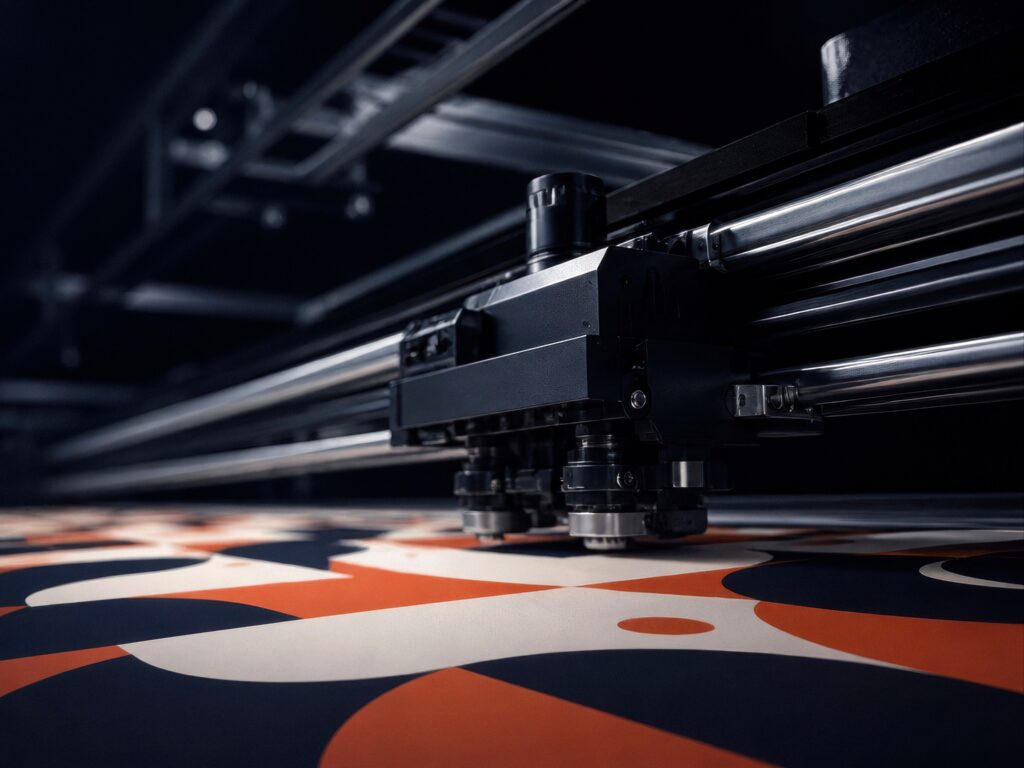
Reactive dye is applied to cotton or linen and then fixed with heat and steam. The heat triggers a chemical reaction: the dye forms a covalent bond with the cellulose in the fibre and becomes part of the material itself. Nothing sits on the surface, so the fabric feels exactly like unprinted cotton, drapes the same and breathes the same.
Pigment printing works the other way round. Pigment particles do not react with the fibre at all — a binder holds them onto the surface. That independence from fibre chemistry is pigment’s strength, because one process can print on most fabrics. It is also its weakness: every pigment print is a thin surface layer, and the binder is what decides how the print feels and how it ages.
If you want the full chemistry, our reactive print guide walks through the process step by step; the reactive vs pigment technology page is the condensed spec-sheet version of this comparison.
Side by side: how the two methods compare
| Reactive printing | Pigment printing | |
|---|---|---|
| Where the colour sits | Inside the fibre — a covalent bond with the cellulose | On the surface, held by a binder |
| Fabrics | Cotton, linen and other cellulose fibres | Most fabrics, including blends |
| Hand-feel | Like unprinted cotton — no added layer | Carries the binder as a thin surface layer |
| Wash behaviour | Colour typically holds 600+ wash cycles; nothing on the surface to crack | Can crack and fade at flex points as the binder wears |
| Best for | Apparel, bedding and anything washed often | Mixed-fibre ranges and items washed rarely |
When pigment printing makes sense
Pigment earns its place where fabric variety matters more than longevity. Because the binder does not care which fibre it sits on, a single pigment process can cover cotton, blends and synthetics in one range — useful when the product mix is wide and the print method has to follow it.
The trade-offs appear with wear. At flex points — elbows, knees, seams, anywhere fabric folds — the binder flexes with the fabric and gradually cracks and fades over repeated washing. For products that are washed rarely, those weaknesses may never show. For products that live in the washing machine, they will.
When reactive is the better fit
For cotton and linen products washed on a normal domestic rhythm — T-shirts, hoodies, bedding, table linens — reactive is the stronger method on every axis the end customer notices. The colour typically holds for 600+ wash cycles, which in practice means the print outlives the fabric. There is no surface layer, so there is nothing to crack, and an all-over print feels identical to a blank panel.
This is why Fabrixa, Europe’s reactive textile platform, prints cotton and linen reactively, made in Portugal and Spain on organic cotton bases certified under GOTS and OEKO-TEX Standard 100. Polyester items run on sublimation in the Netherlands instead — reactive chemistry needs cellulose to bond with. Everything across apparel, home textiles and fabric by the metre is available from a single piece: MOQ 1, no setup fees, no contracts.
How to decide for your product
- Washed weekly — apparel, bedding, table linen? Reactive. Wash-fastness and unchanged hand-feel are the whole point.
- Cotton or linen product? Reactive — the chemistry is built for cellulose fibres.
- Polyester or performance fabric? Neither. That is sublimation territory — see how all the methods split in our reactive vs DTF vs sublimation comparison.
- Rarely washed, mixed-fibre product? Pigment can be adequate — judge whether a surface layer suits how the product is used.
Whichever way you lean, you do not need production-ready files to start. Send your artwork as a PDF, TIFF, JPG or PNG and Fabrixa prepares the correct print files for the fabric and product you choose.
Frequently asked questions
Is reactive printing better than pigment printing?
For cotton and linen products that get washed regularly, yes: in-fibre colour keeps the original hand-feel and typically survives 600+ wash cycles. Pigment’s advantage is fabric flexibility, not durability.
Why does pigment printing crack?
Because the colour sits in a binder layer on the fabric surface. At flex points the binder fatigues as the fabric folds, so it cracks and fades over repeated washing. Reactive prints have no surface layer, so there is nothing to crack.
Does reactive printing work on polyester?
No. Reactive dye needs cellulose to bond with, so it works on cotton, linen and other natural cellulose fibres. Polyester is printed with sublimation instead.
Does reactive printing change how the fabric feels?
No. The dye becomes part of the fibre, so a fully printed panel feels the same as an unprinted one — same drape, same breathability, no stiffness.
Feel the difference on real fabric
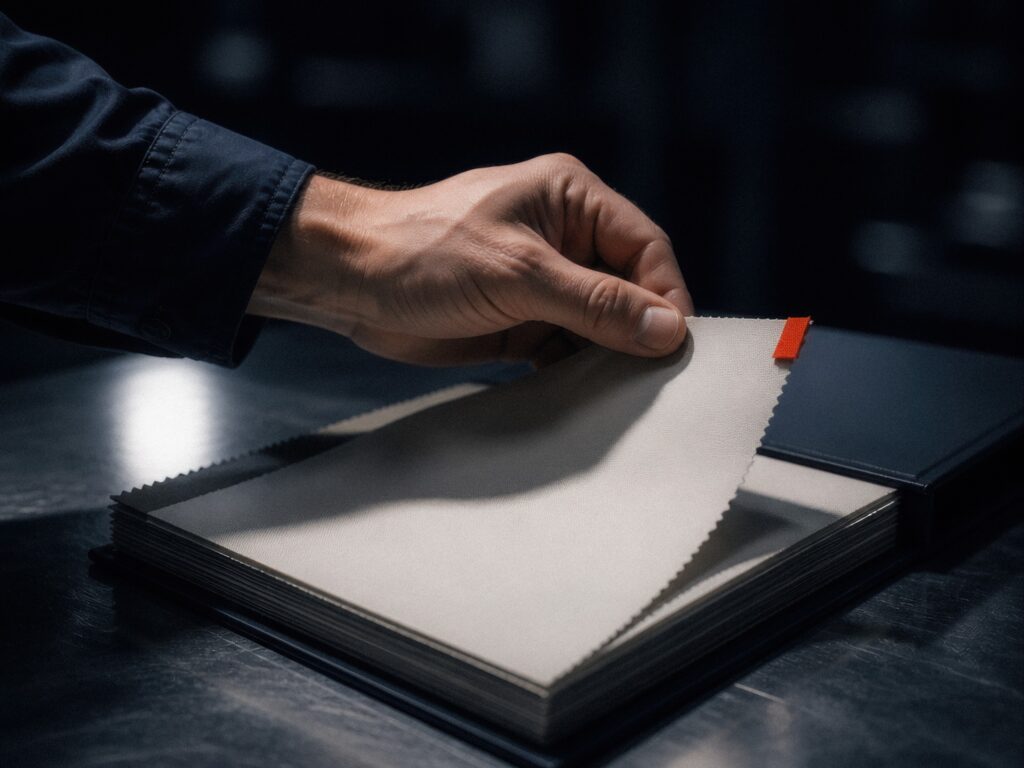
The gap between a surface print and in-fibre colour is easier to feel than to read about. Order a Sample Pack to hold reactive colour on the cotton bases — its cost is credited against your first order — or talk to our team about which method suits your product line.