














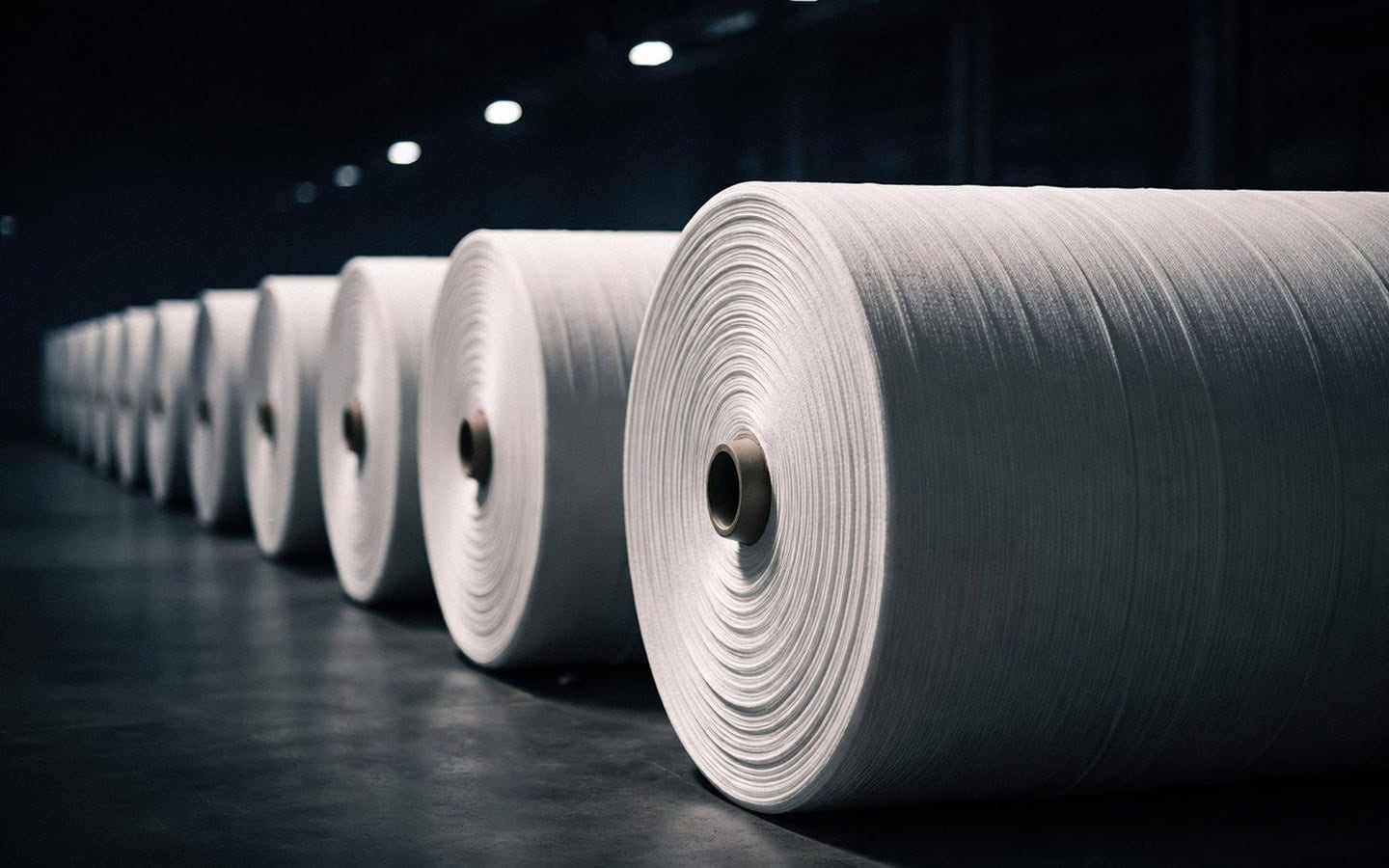
Reactive textile printing can be a genuinely lower-impact way to make printed cotton, but it is not “zero impact” and no honest supplier should call it carbon neutral. The strongest sustainability gains come from how you produce — printing to order at a minimum order quantity of one, on organic cotton, through a short European supply chain — rather than from the ink alone. Printing still uses water and energy. This is an honest look at where sustainable textile printing earns the claim and where it doesn’t.
The honest answer, up front
The biggest environmental cost in textiles isn’t usually a single print run — it’s overproduction. Garments made speculatively, then discounted, warehoused or destroyed, carry the full footprint of fibre, dye, water and freight for nothing. Reactive printing’s sustainability case rests mainly on avoiding that waste, using better base materials, and keeping distances short. Those are real, measurable levers. The dye chemistry itself is a smaller part of the story than most marketing suggests.
So: is it sustainable? More sustainable than mass, speculative production on synthetic-heavy supply chains — yes, when done well. Impact-free — no. Both things are true at once.
The real levers that reduce impact
On-demand production and MOQ 1
Fabrixa’s minimum order quantity is one. You can order a single piece or tens of thousands, with no minimums, no setup fees and no contracts. Printing to actual demand means you don’t cut, print and ship stock that never sells. Cutting overproduction is the single clearest way on-demand production lowers total footprint — you make the thing someone actually ordered, and nothing else.
A short European supply chain
Fabrixa produces across Portugal, Spain and the Netherlands. For a European brand, that replaces long-haul intercontinental freight with regional distances. Reactive print on cotton and linen runs in Portugal and Spain; sublimation on polyester runs in the Netherlands. Shorter routes to the customer mean less freight impact per parcel than shipping finished goods across the world — a straightforward reduction, not a slogan.
Organic cotton and certified materials
Organic cotton is the default base. The catalogue is certified to GOTS (Global Organic Textile Standard), OEKO-TEX Standard 100 and Made in Green. GOTS covers organic fibre content plus environmental and social criteria along the chain; OEKO-TEX Standard 100 means the finished textile has been tested for harmful substances. Certifications aren’t a sustainability score on their own, but they are independent, auditable proof that specific things were checked — which is more than an unverified “eco” label.
The dye bonds into the fibre — so it lasts
In reactive printing the dye forms a covalent bond with the cellulose in cotton and is fixed permanently under heat and steam. The colour becomes part of the fibre rather than a surface layer, so it doesn’t crack or peel and holds typically 600+ wash cycles — effectively until the cotton itself wears out. Longevity is a sustainability lever too: a garment that stays wearable and doesn’t fade to the bin gets more use out of the resources already spent making it.
Levers vs limits
Here’s the honest split — what genuinely helps, and what it does not fix.
- Lever — no overproduction: MOQ 1 and print-to-order avoid speculative stock and its waste.
- Lever — shorter freight: regional EU production cuts long-haul distances for European brands.
- Lever — better fibre: organic cotton as the default base, GOTS / OEKO-TEX / Made in Green certified.
- Lever — durability: in-fibre colour lasting 600+ washes extends usable garment life.
- Limit — water: reactive printing and finishing still use water. Fewer wasted garments helps; it doesn’t make the process dry.
- Limit — energy: fixing dye under heat and steam takes energy. On-demand avoids wasted energy, but each real order still costs some.
- Limit — not “zero”: there is no carbon-neutral textile. Honest framing is measured reductions and known limits, not absolute claims.
- Limit — substrate scope: reactive works on cotton and cellulose; polyester items use sublimation. Fibre choice still carries its own footprint.
What “sustainable” should and shouldn’t mean here
Read any claim carefully. “Made on organic cotton” is verifiable and useful. “Prints to order, so no overproduction” is a real mechanism. “Carbon neutral” or “zero impact” for a wet, heated textile process is not something we’ll tell you, because it isn’t true. Sustainable textile printing is best understood as a set of concrete reductions — less waste, shorter freight, better fibre, longer garment life — stacked together, each honest about its own ceiling.
If you want the detail behind these claims, our sustainability approach sets out the materials and certifications, our carbon footprint page explains how we think about emissions without overstating them, and our eco-friendly materials page covers the cotton and linen bases.
FAQ
Is reactive printing better for the environment than pigment or DTF?
It depends on the lever you care about. Reactive bonds into cotton fibre and lasts far longer than a surface print, which extends garment life. But the bigger sustainability gains come from producing on demand, on organic cotton, through a short supply chain — not from the print method alone.
Does on-demand production actually reduce waste?
Yes, in the clearest way available: you print what’s ordered and nothing speculative. With MOQ 1, no setup fees and no minimums, brands aren’t forced to over-order stock that risks being discounted, warehoused or discarded.
Can you call reactive printing carbon neutral?
No. Printing still uses water and energy, so we won’t claim “zero” or “carbon neutral”. We’d rather describe real, measured reductions — less overproduction, shorter freight, certified organic materials — and be straight about the limits.
What certifications back the sustainability claims?
Organic cotton is the default base, and the catalogue is certified to GOTS, OEKO-TEX Standard 100 and Made in Green — independent standards that verify organic content and test the finished textile for harmful substances.
See it for yourself
The honest way to judge a claim is to hold the fabric. Order a Sample Pack to feel reactive print on organic cotton bases first-hand — its cost is credited against your first order. Want to weigh up the specifics for your range? Talk to our team and we’ll walk through the materials, certifications and production for what you actually make — no overstated numbers.
